
The end section of a triptych from the early exhibition titled: Hunters and Consumers. The paintings together form a procession following a man carrying a wild boar on his back as a trophy . The other paintings are titled: Trophy Hunter (this), The Guide and Pighunter. They are all reunited in a reproduction titled: The Hunt.
exhibit
2008 • Hunters & Consumers • (solo exhibition)
The show title is a play on our heritage as hunters and gatherers. I am interested in exploring our relationship to the animals in the immediate environment, especially their sporting and culinary roles. The word itself - ‘animal’ has derogatory connotations: an inhuman person; brutish or beastlike. Hardly ever perceived as a compatriot of the same planet. It’s a pecking order and the writer of the list decides the order of merit.
As consumers, we tend to not think past the food we buy which is expertly divided and generically packaged in our local supermarket. On the farm it’s like Hansel and Gretel. The farmer feeds his captive animals with care and attention given to a good healthy balance between muscle and fat. Until the ultimate destiny presents itself - Dinner.
I believe that it’s important to have knowledge of the source of the food that we put in our mouths. With this in mind, I was witness to a home kill. To see the process in action, the beginning of the production line. It was fascinating that the animal was given as little stress as possible - but the main motivation for this was not so much sympathy for the animal but so that the beast’s death wouldn’t taint the meat. Although I enjoy a good steak along with every other carnivore, I wanted to spare a thought for the sacrifice that is my main course. A form of Grace before the main meal.
The consumer paintings depict our care for the food we eat. Even if this nurture is intended specifically for the pleasure of our own palette.
The paintings of the hunters are a loose series, a procession. Instilling some formality into the proceedings the hunters form a line behind the trophy, as they exit the bush.
Aristotle once said that if you want to show your viewpoint to its best advantage. You will need to create ethos, pathos and logos. With this concept in mind I have bound the ‘Hunters’ works to each other: The pig hunter carries his prize out of the bush, a rite of passage but one that is a mixture of pride and pain. An old tattoo is on his arm depicts a blade cutting away the word stained upon his skin, ‘Pathos’. A removal, from his body, of pity. A benefit if you are a hunter.
‘The guide’. The blurred soft background portrays the spiritual nature of the bush. In sharp contrast is the exhilaration of the hunt manifested by the eagerness of the dogs. Stamped onto the dog’s collar is the word ‘Ethos’ meaning character, spirit or morality. We absorb the essence of the animal we eat, assimilating its flesh into ourselves. And from this we live and grow.
The trophy hunter’. Wastage of the food we eat is to disrespect the animal that was killed for our benefit. To kill solely for the sake of pleasure transforms the hunt into the ‘game’ and creates the compulsion to feel superior. By hunting animals, killing them and hanging their heads on the wall, I believe, is a poor form of self-expression. Engraved upon the hunter’s gun is the word ‘logos’. But it is written upside down to create its opposite meaning; so logical (logos) becomes illogical.
Hunters and Consumers
BARRY ROSS SMITH
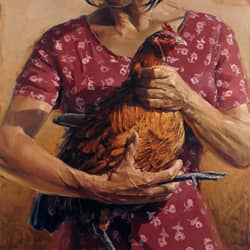
Foul Deed 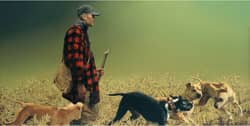
Guide 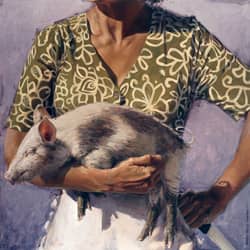
Little Swine 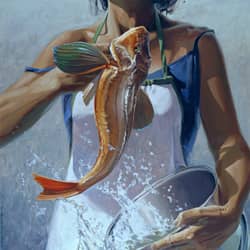
Fishy Tale 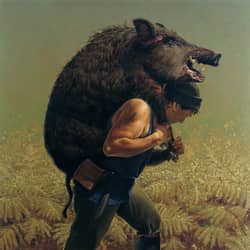
Pighunter 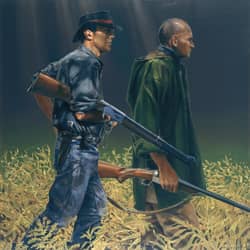
Trophy Hunter